Guardians of the Lake: Photographing Osprey on Lake Champlain
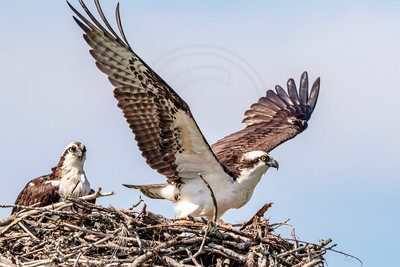
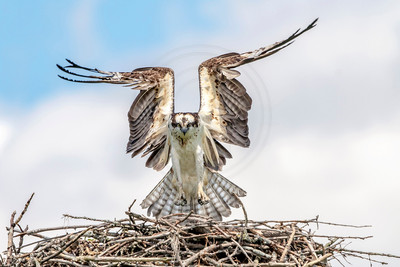
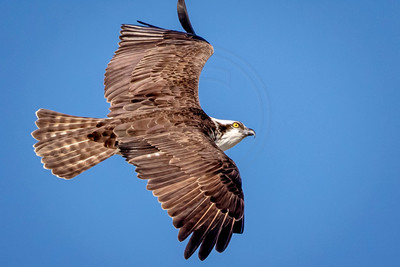
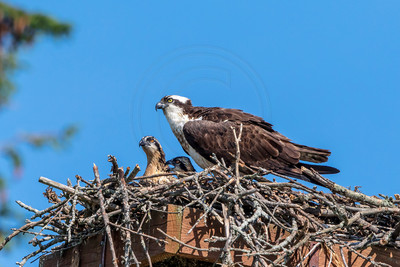
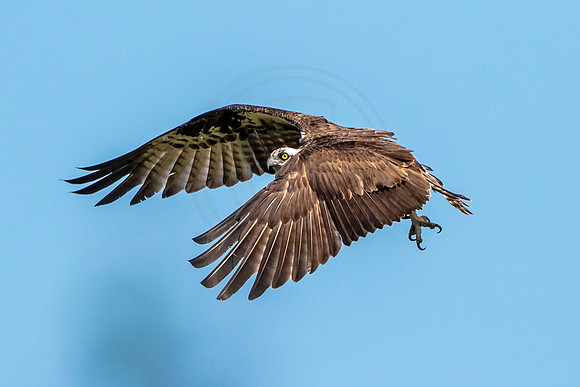
Lake Champlain has become one of my favorite places to photograph Osprey. Every year, as the seasons change, these incredible birds return and reclaim their nests along the shoreline — and there are so many of them. Nests dot the lake from end to end, offering endless opportunities to observe and photograph one of North America’s most skilled fishing raptors.
Over the years, I’ve had the privilege of visiting many of these nests — sometimes from land, and other times quietly paddling out in my kayak. Each approach offers a completely different perspective, both visually and experientially, and both come with their own unique challenges and rewards.
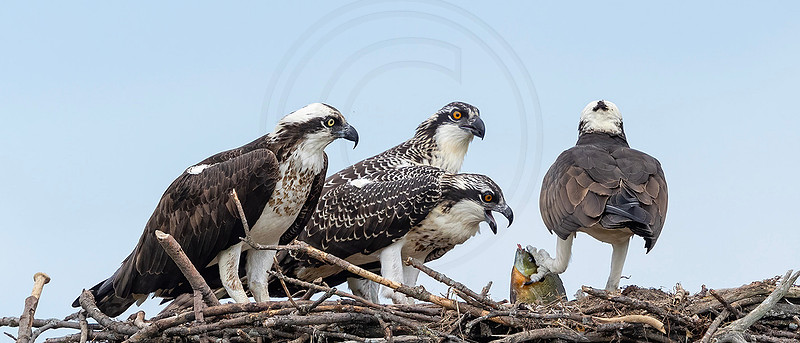

🐦 About the Osprey
The Osprey (Pandion haliaetus) is a fish-eating raptor perfectly adapted to life near water. Often called the “fish hawk,” ospreys are powerful, precise hunters and one of the most recognizable birds found along Lake Champlain.
Habitat
Ospreys live wherever there is:
-
Large bodies of water
-
Abundant fish populations
-
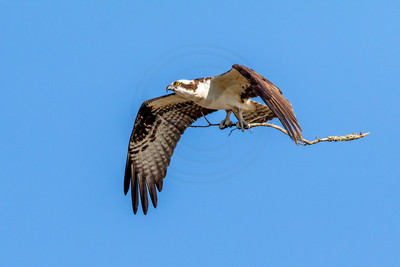
Tall structures or platforms for nesting
Along Lake Champlain, they nest on:
-
Purpose-built nesting platforms
-
Channel markers
-
Utility poles
-
Dead trees near the shoreline
Their strong association with water makes this lake an ideal breeding and feeding ground.
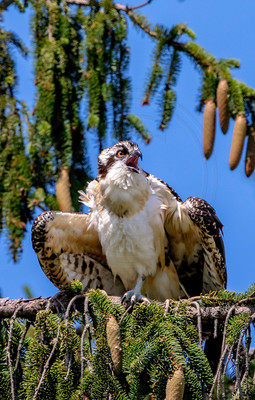
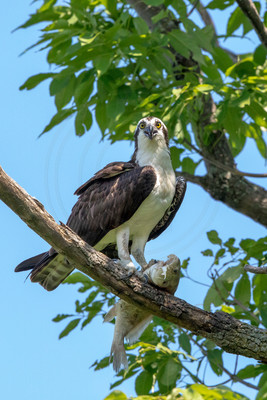
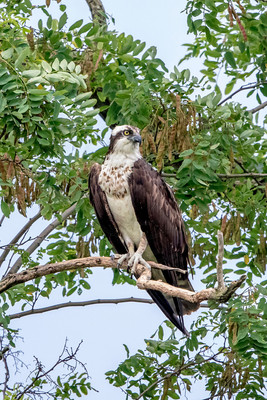
🐟 Diet & Fishing Behavior
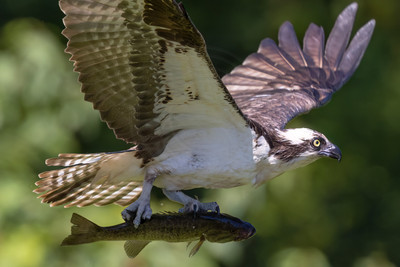
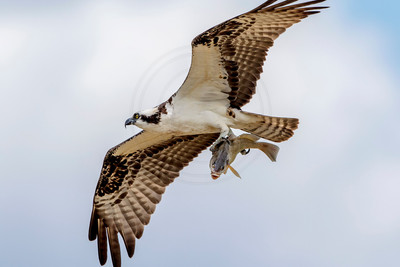
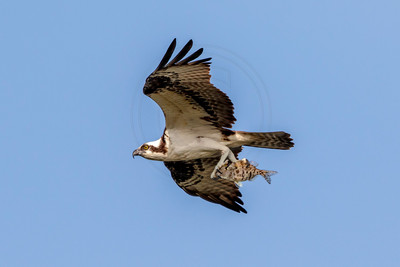
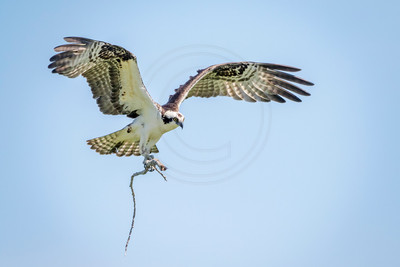
Ospreys feed almost exclusively on fish.
-
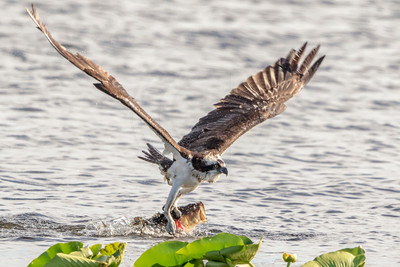
They hunt by hovering or soaring above the water
-
When they spot prey, they plunge feet-first
-
Their reversible outer toes and spiny foot pads help grip slippery fish
-
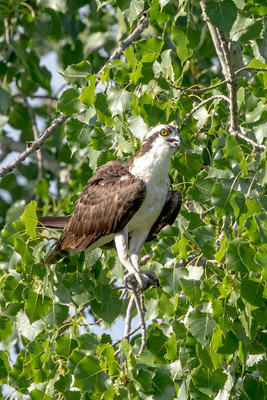
Fish are often carried head-forward to reduce wind resistance
Photographing fishing behavior from a kayak is thrilling, but on a lake as large as Champlain, distance is often the biggest challenge. Even when I witness a fishing dive, it’s usually too far away for photos — and frequently backlit, no matter how carefully I try to position my kayak.
🐣 Breeding & Nesting Season
Nesting season is, without question, the most fascinating time to observe ospreys.
-
Ospreys typically return to the same nest year after year
-
Eggs usually hatch a day or two apart, not all at once
-
Clutches commonly contain 1–3 chicks
Early Nestling Stage
When chicks are very young, they:
-
Can barely sit up
-
Often topple over into the nest
-
Rely entirely on the parents
At this stage, things can look a little uneventful — especially if there’s only one chick.
Growing & Competition
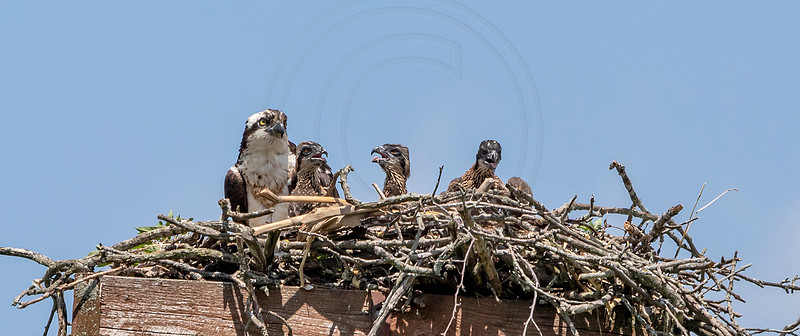
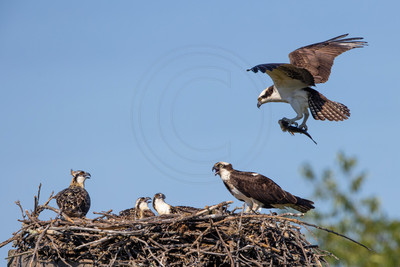
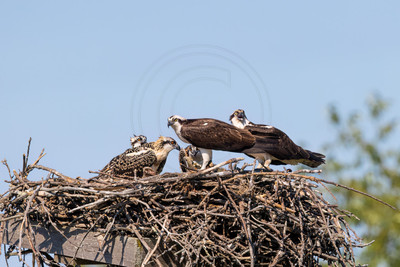
When there are two or three chicks, the nest becomes much more interesting:
-
Chicks interact and compete for food
-
Size differences become noticeable due to staggered hatching
-
Older chicks often show more aggression toward younger siblings
That one- or two-day age gap can make a surprising difference in strength and behavior.
Preparing for First Flight
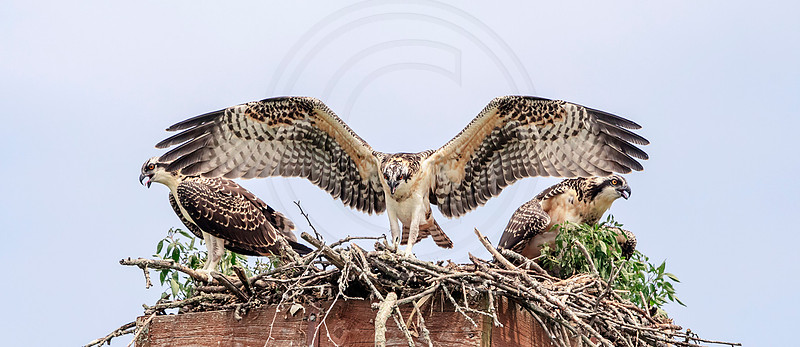
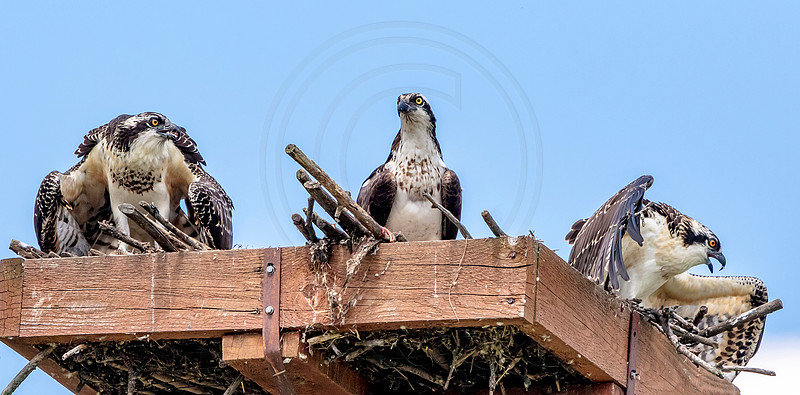
As chicks grow:
-
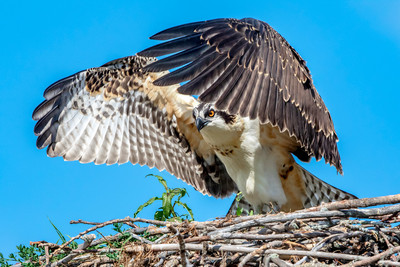
Parents begin leaving them alone in the nest
-
Wing-flapping and strengthening exercises become constant
-
Vocal begging increases dramatically
Watching this phase is both exciting and nerve-wracking.
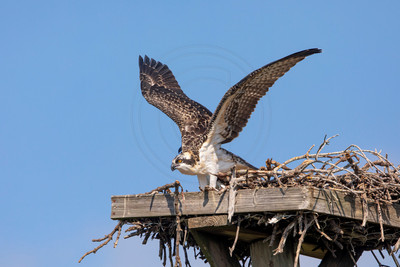
🪽 First Flights: Awkward, Beautiful, and Unforgettable
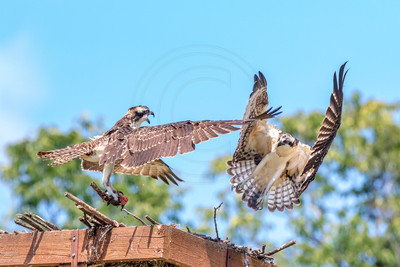
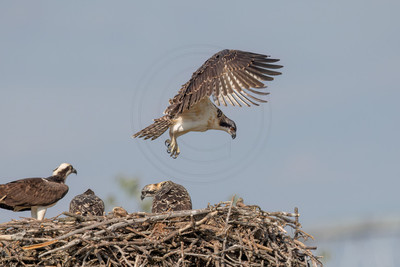
Being present for a chick’s first flight is one of the highlights of photographing ospreys.
The first attempt is often:
-
Short
-
Awkward
-
Confusing
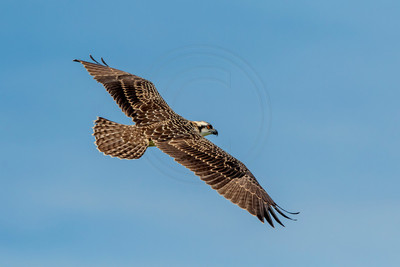
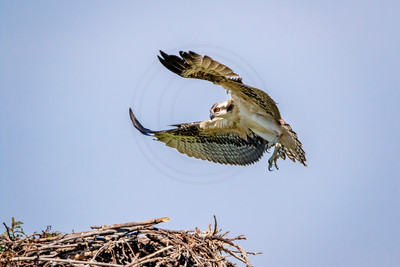
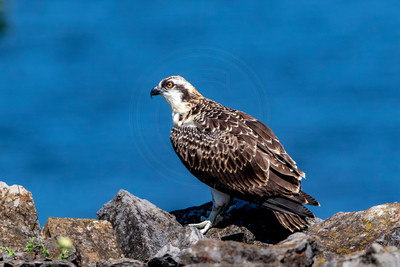
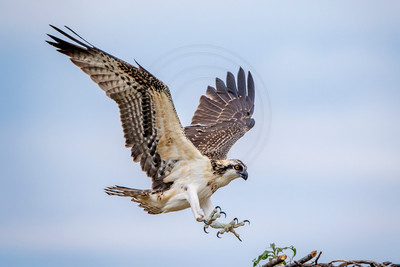
New flyers may circle the nest, miss their landing, or try several times before successfully returning. It can be stressful to watch — but they always seem to figure it out.
As their confidence grows:
-
Flights become smoother
-
Distances increase gradually
-
Young birds begin venturing farther from the nest
From my observations, when there are multiple young, they tend to stick around the nest area longer than when there’s only one. Those interactions make this stage especially fun to observe and photograph.
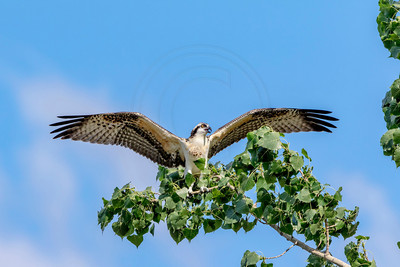
🌍 Migration
Ospreys are long-distance migrants.
-
In late summer and early fall, they leave Lake Champlain
-
Most migrate to Central and South America
-
Some travel thousands of miles alone — even young birds
By spring, they return once again to reclaim their nests, repeating the cycle.
📸 Photographing from Land vs. Kayak
From Land
Photographing from land offers:
-
Solid, stable footing
-
Easier mobility and repositioning
-
The ability to monitor nests over time
From land, I use my:
-
Canon 500mm lens
-
1.4x teleconverter (700mm total)
-
Monopod or tripod for added stability
This setup is ideal for watching nests throughout the season and documenting chick development.
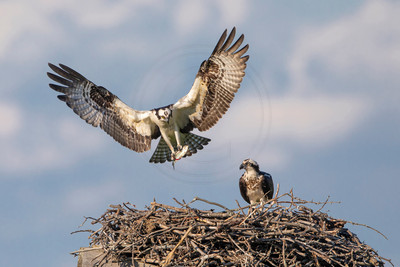
From Kayak
Photographing from a kayak is a completely different experience.
Challenges include:
-
Constant motion — even in calm water
-
Drift, no matter how careful you are
-
Wakes from passing boats that cause bobbing and pull
Because of this, I choose lighter, more manageable gear:
-
Canon EF 100–400mm
-
Canon RF 100–500mm
Kayaking offers a better angle for observing fishing behavior, but positioning is always a challenge — especially on a lake as large as Champlain.
I’m currently transitioning my gear from EF to RF as mirrorless continues to lead the industry. Over the past two years, I’ve primarily been shooting mirrorless, and that transition has worked well for both land and kayak photography.
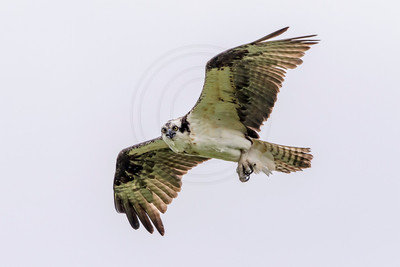
❤️ Why I Keep Coming Back
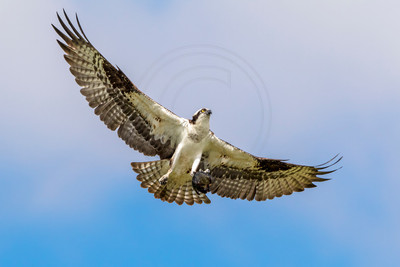
Whether I’m standing on solid ground watching chicks grow or drifting quietly in my kayak while ospreys fish nearby, photographing ospreys on Lake Champlain never gets old.
Each nest tells a different story. Each season unfolds a little differently. And every year, I’m reminded why these birds are such powerful symbols of resilience and return.
They are truly the guardians of the lake — and it’s a privilege to watch their lives unfold.